

Root Cause Intelligence Explained
Root Cause Intelligence is a feature within the Clinical Insight section of a case. It analyzes the case signals and surfaces possible physiological drivers worth investigating.
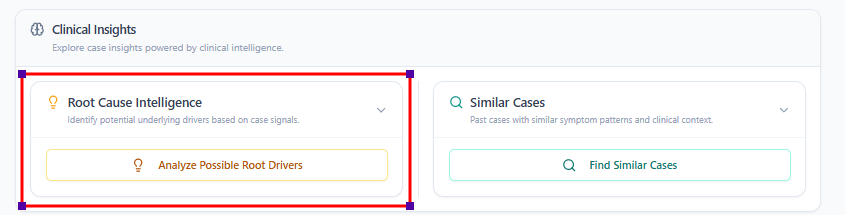
What It Does
After Detected Patterns identifies clinical themes, Root Cause Intelligence asks: What underlying systems might be contributing to these patterns?
It produces a short list of possible root drivers, each with:
A confidence level (high, medium, low)
The signals from the case that support that hypothesis
A brief clinical explanation
Example Output
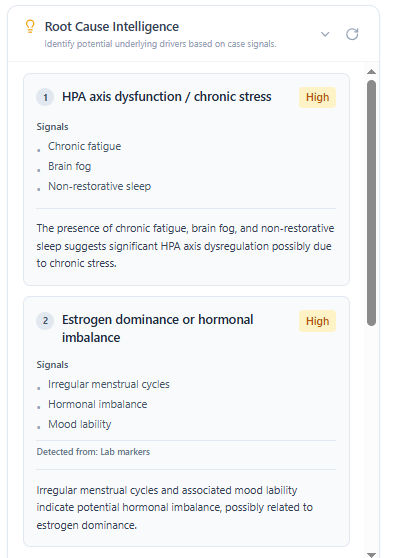
For a case with fatigue, digestive complaints, and sugar cravings:
Gut microbiome imbalance — High confidence
Signals: digestive symptoms, metabolic cluster, notes mentioning bloating
Blood sugar dysregulation — Medium confidence
Signals: sugar cravings, energy crashes, metabolic pattern
Chronic stress / HPA axis strain — Medium confidence
Signals: fatigue pattern, adrenal markers in notes
What It Is Not
Root Cause Intelligence is a clinical reasoning assistant, not a diagnostic engine. It highlights possibilities based on available signals — your clinical judgment determines which are relevant for this patient.
Strengthening Confidence in Root Causes
For some cases, PraxPilot may suggest areas to further validate identified root causes.
These are designed to help you:
Confirm underlying drivers
Identify missing clinical signals
Improve confidence before finalizing treatment
How this differs from pattern prompts
Detected Pattern prompts → help refine observed signals
Root Cause prompts → help validate deeper physiological drivers
Both are designed to support clinical accuracy and confidence.
When It Works Best
Root Cause Intelligence becomes more useful when cases include:
Specific symptom clusters
Detailed clinical notes
Lab markers or uploaded lab panels
Availability
Root Cause Intelligence is available on paid plans and appears within the Clinical Insight section of a case.